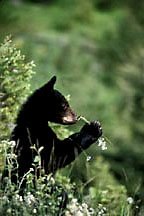
 It's Saturday morning and we're FINALLY packing up for our trip to the Bear's Den in Gatlinburg, TN. For me, that means that I've got to gather up all of my photographic gear, because one of the main reasons we're heading south this time of year is to participate in the 56th Annual Spring Wildflower Pilgrimage.
 The Spring Wildflower Pilgrimage is a seven-day event consisting of a variety of wildflower, wildlife, and human history walks, motorcades, photographic tours, art classes, and indoor seminars.
Most programs are outdoors in Great Smoky Mountains National Park, but the indoor programs we're attending will be held in the newly-renovated W. L. Mills Auditorium in Gatlinburg, TN.
We're signed up for the Tuesday Photography Workshop and the Wildflower Walk: Ash Hopper Branch hike, not to mention several of the other W.L. Mills programs.
It's been a while since I've done much flower and scenic photography so it took a while to gather up all the equipment: Small tripods, reflectors, macro lenses, etc. I'm going to have to make sure that all that stuff makes it into the car FIRST! What the heck . . .we can always buy clothes once we're there, right?
Since Spring and Summer are probably when most people take to the outdoors with their cameras, I thought I'd post a few photography tips for East Tennessee. The following tips are from an article titled Great Smoky Mountains Photography - click here for the full article.
The rolling mountains receding into the mist, a Tennessee warbler singing on a tree branch, Catawba rhododendrons blooming in June: Great Smoky Mountains National Park offers photographers myriad opportunities to take stunning photographs.
Here are some suggestions for getting great shots.
Composing Your Picture One secret to good photography is learning to see as your camera does. While your mind may embrace the whole scene before you, from the ground to the clouds above your head, your camera is more restricted. To compose a strong image, choose your subject carefully and move in on it, eliminating unneeded detail.
Pay attention to framing and perspective. Off-center compositions are usually more interesting than neatly symmetrical ones, so try framing your subject - one of the park's many waterfalls, for example - off to one side. Photographed from below, the waterfall will appear larger and more imposing. A subject shot from above will seem smaller.
Great Smoky's sights - its hazy, rolling mountains, meadows, and many historic buildings - are perfect for picture-taking. But a prominent object in the foreground - a tree, a boulder, a brightly dressed family member or friend - helps anchor the view and provides a sense of scale. Frame your horizon so that it is above or below the center of your photograph. To increase a sense of depth, use vertical framing.
Range of Light Early morning and late afternoon generally produce the best lighting conditions for photographs because the slant of the sun creates more texture and depth. Early morning sunlight has a bluer tone, which makes colors in photos appear cooler. Dusk, by contrast, lends a warm, rosy tone to photos. Photos shot at midday may appear flat and the colors dull. To cut down on glare, use your free hand to shade the camera from direct sunlight.
Mountain Landscapes A wide-angle lens works best for panoramic photos of the Smokies. Many photographers keep a UV haze filter on their lenses as much to protect the lens as to cut through haze. Consider removing the haze filter or using a polarizing lens to accentuate the Smokies' famous haze and the silhouette quality of the mountains.
Photography Ethics No shot is worth harassing wildlife or damaging vegetation. Unless your camera is equipped with a telephoto lens (at least 200 mm), don't do close-up photography. A general rule of thumb is that if the animal notices you taking its picture, you're too close. Don't walk into protected meadows or leave backcountry hiking trails because you may trample sensitive vegetation or cause erosion.
Film Processing and Supplies When traveling, make sure your batteries are fresh and pack plenty of film. Should you run out, the park's three visitor centers all stock film for cameras and camcorders. Many film processors and retailers are located in the nearby gateway communities.
What About Video? Anything you can photograph you can, of course, videotape. Camcorders also have the added benefit of audio, so you capture not only the movement of a rushing stream or waterfall but also its sound.
Your video camera can double as a notebook, to "jot down" information about the scenery you are filming. Record ranger-led programs, filming the scene while the ranger narrates. (It's a good idea to ask permission before you begin filming.) Film the text of wayside exhibits and then slowly scan the scene they describe. Better yet, have someone read the text aloud while you take in the view.
When zooming, walk closer to your subject, using the widest focal length. Zooming in too tightly risks ruining your image. Panning is most effective when done atop a tripod; this steadies your camera and eliminates distracting movement.
The most important video tips? Don't just "point and shoot." Also, don't let the video camera roll on endlessly; try to edit the videotape as you go. With a little planning, you can bring the best of the Smokies back home with you.
Follow these helpful tips from Emmy-Award-winning filmmaker Sterling Johnson. To jog your memory, think "TEMPO":
T is for TIME: Take a little time to think about what you are going to film and how you are going to film it. Set up a tripod and use it as often as possible.
E is for EXPOSURE: Be aware of how the automatic exposure system can affect your scene. You can balance the amount of light and dark areas in the frame for an even exposure.
M is for MOVEMENT: Look for movement in the scene you're about to film (rushing water, trees blowing in the wind, moving animals, etc.). Use camera movement that has a beginning and an end.
P is for PACE: Plan how your segments will fit together as a story. One well-planned shot is better than ten that are unplanned.
O is for OBJECTIVE: What is the objective of your video? Who is your audience? A too-short video is better than a too-long one.
Labels: Photography, Spring, Wildflower, Wildflower Pilgimage
 As spring begins to sparkle throughout the Great Smoky Mountains, Gatlinburg blossoms into the center of all things botanical during the National Park’s Great Smoky Mountains annual Wildflower Pilgrimage and National Park Experience.
 The Wildflower Pilgrimage offers more than 150 programs including an array of instructional walks and guided hiking tours tailored to meet individual walking ability, along with demonstrations and guest lecturers. Tours showcase the abundant varieties of wildflowers, plants, ferns, mosses, trees and shrubs, as well as birds, bears, boars, bats, salamanders and insects, all native to the Great Smoky Mountains.


